

Starting A Publishing Company Without Becoming the Thing I Was Avoiding
On independent authorship, creative stewardship, and building a publishing home that does not sand the quirky edges off good work.

For years, being an indie author has meant balancing the actual writing bit with a mountain of publishing work. We’re talking ISBNs, KDP forms, cover proofs, metadata, inventory, marketing, and all the sundry administrative gremlins that multiply once a book becomes more than just a draft only I’ve ever seen. I’ve been every department at once, including the person deciding whether a slightly different shade of blue on a cover proof actually matters or if I’ve just been staring at the same file too long.
When you publish independently, the panic becomes... artisanal.
I’ve worked this way from the beginning because I care about creative control. About having the freedom to make decisions that serve the work rather than a sales projection and letting the weird little thing remain the weird little thing it wants to be. That independence is as important as ever, which is why it feels both natural and faintly absurd to say that I’m starting Distillery Publishing.
The Accidental Publisher
I’ve resisted that sentence for a while because it sounds too official. A publishing company sounds like departments, letterhead, and someone who understands taxes without experiencing a faint buzzing sound behind their eyes. What I have right now is hard-won experience, a belief in books that don’t arrive pre-flattened for market convenience, and a desire to help publish writers I believe in.
It’s not just my own work anymore.
That’s the big shift. For a long time, every lesson I learned about independent publishing was something to apply to my own books. Every mistake was mine to make. Every delay was mine to explain. If something went wrong, at least I hadn’t failed anyone but myself.
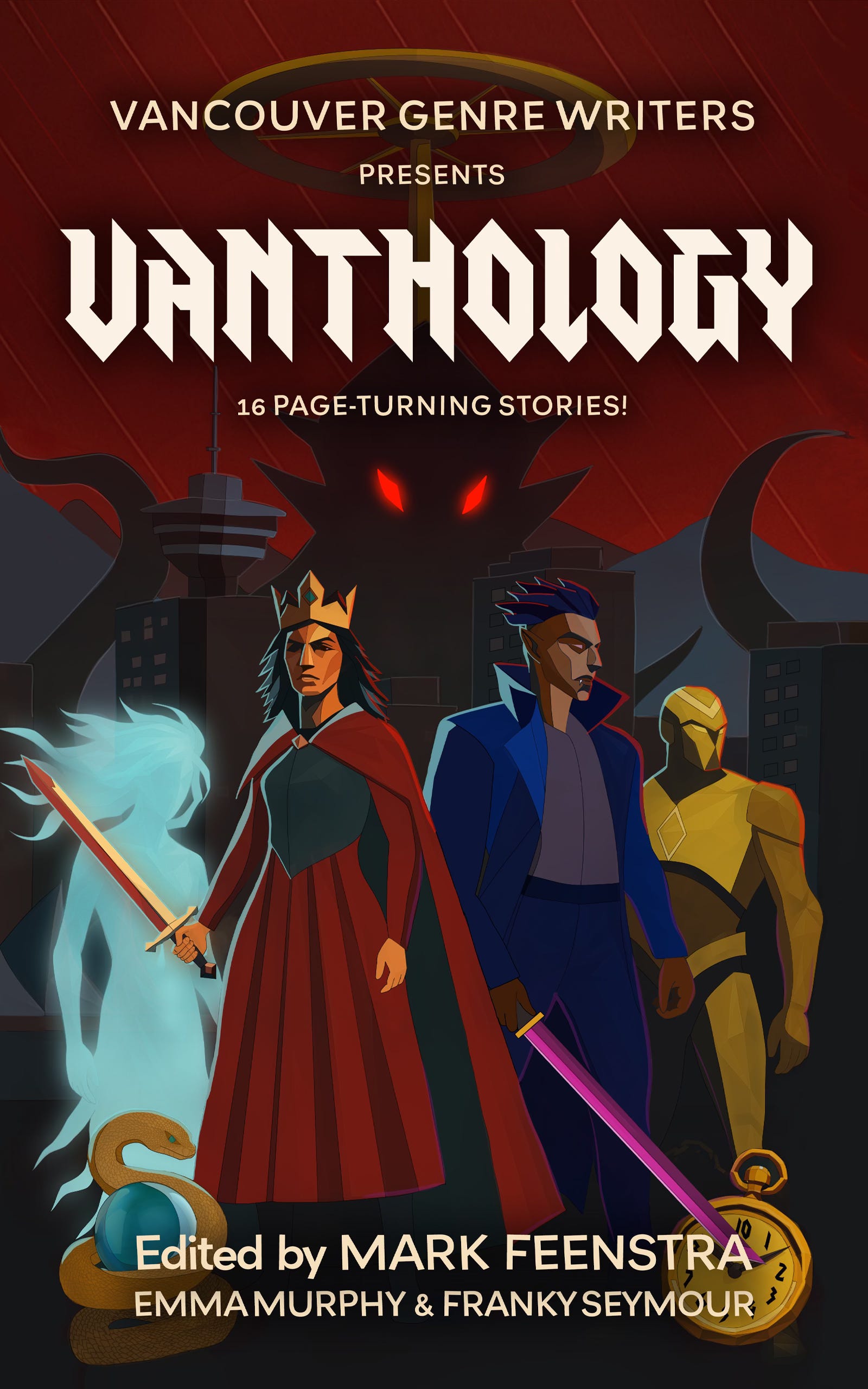
Over time, I’ve found myself surrounded by writers whose work I admire. Writers in my community, from my writing group, and those I’ve stood beside at Vancouver Genre Writers events and anthology launches, watching readers connect with stories that might otherwise have stayed trapped on someone’s hard drive forever. Writers with stories that deserve more than a polite nod, a vague “not a fit for us at this time,” or a version of publication that asks them to remove the unique quirks made the work interesting in the first place.
Strengthening Is Not Dilution
There’s a kind of writing advice that sounds practical until you notice how often it points toward sameness. Make it more marketable. Make it easier to categorize. Make the protagonist more broadly appealing. Make the book easier to pitch in one sentence to someone who may or may not have eaten lunch. Hell, I’ve given that advice to friends seeking agents and publishing contracts in the past myself.
Sometimes that advice can be useful. Obviously structure and editing matters. Reader experience matters a lot. I’m not trying to pretend every unusual choice is secretly genius. Sometimes the dragon isn’t a metaphor for grief, it’s just confusingly introduced in chapter seventeen and everyone is too polite to say so. There is, however, a meaningful difference between strengthening a piece of work and diluting it. Strengthening asks what the story is trying to become and helps it get there. Dilution asks what the story can stop being so it will cause fewer problems.
I have no interest in building a press that does that. What I want is smaller, more specific, and probably more difficult: a publishing home for books I believe in, by writers whose work I want to stand behind, without pretending my belief alone replaces hard work. Publishing is editing, design, metadata, distribution, contracts, spreadsheets, schedules, and deciding how many copies of a book to bring to an event when the wrong answer is apparently always “not quite enough.”

Publishing as Advocacy
Publishing someone else’s work also means standing behind it in public and saying, “I think this deserves your attention.” It involves giving belief a practical shape: a cover, a release date, a table at an event, a bookstore catalogue listing, a copy placed into the hands of a reader who might not have found it otherwise. There’s a responsibility in that which feels different from publishing my own work. When I help put out someone else’s fiction, I hold their trust in my hands. It’s not just another book for the back catalogue, but years of their work. It’s their vulnerability in hardcopy1.
Before advocacy comes selection. I don’t want to become a gatekeeper, but neither do I want to pretend publishing can exist without checkpoints of some kind. Taste is a checkpoint. Capacity is a checkpoint. Time, money, energy, and attention are all important checkpoint. The question is what they’re for, how honestly they’re named, and whether they protect the work or the comfort of the people making decisions.
For me, that answer begins with trust. Trust in the writer, the story, and in readers to meet something on its own terms. Trust that a book doesn’t have to be made smaller or simpler to be made accessible.
What Independence Is For
I’ve spent years learning how to carry my own books through the world. I know more than I used to about covers, layout, launches, events, distribution, newsletters, ISBNs, and the particular spiritual discipline required to upload files to retail platforms without snapping my keyboard in half. Every day I learn a little more about this business, especially as it shifts and evolves.
At some point, the question changed from “How do I do this for myself?” to “What could happen if I did this for other people too?”
That’s where Distillery Publishing began. I don’t see this as a rejection of independence, but rather an extension of it. Not everyone has the capacity to do what’s necessary, and not everyone is writing works that fits neatly into whatever agents and editors are looking for at any given moment. Distillery exists to serve the overlap between those two.
I’m obviously going to make mistakes here—entire categories of mistakes I didn’t previously know existed. But I know what it feels like to publish work on my own terms, and I know how much it’s meant to find readers who respond to that work because of its particular shape rather than despite it.
I want to use Distillery to help other writers experience that by making room for stories that don’t need to be diluted down before they’re deemed worthy. I want to use the independence I’ve fought for, stumbled through, and frequently sworn at to create something that can hold more than just my own work.
So there it is. After years of being a fully independent author, I’m starting Distillery Publishing.
Apparently independence was never about doing everything alone. It was about learning what was worth preserving, what was worth refining, and who I wanted to stand beside while doing it.
Distillery is currently in the process of signing its first author. If you’d like to stay up to date on new releases and other Distillery Publishing news, go ahead and sign up here:
Until next time, I’ll be hip-deep in the final publication details of The Traveling Librarian. See you Among the Stacks, everyone.
- Mark
Or digital copy if you’re an ebook person. Do ebooks have souls?