

Stories as Sanctuary
Fiction as a Tool for Healing

I’ve had a mostly-written draft of these thoughts sitting in front of me for a couple of weeks now, and I’ve been struggling to figure out how to say what I want to say. Like many of you, I’ve been consumed with rage and helplessness after seeing the news out of Minneapolis and Iran, not to mention some hateful events happening right here in my own backyard of Vancouver. After weeks of keeping my phone in another room and almost entirely avoiding social media, I find myself scrolling through Threads, Bluesky, TikTok, and Reddit looking for updates on the latest tragedy or political/corporate horror. And of course, none of it helps. I come away feeling sicker than ever about the state of things; engulfed in hopelessness and wondering what I can possibly do to stem the tide of greed, vitriol, and violence that’s taken hold of so many people as of late. What follows are my thoughts from before the latest escalations in Minneapolis, and before OneBC were treated to an RCMP escort while attempting to bring their vile rhetoric to the University of British Columbia. Before local tech company Hootsuite announced it was once again pursuing a contract with ICE, the CEO declaring, “We did nothing wrong here,” in her attempt to sidestep responsibility for partnering with a blatantly fascist and overreaching organization in the name of profit.
I was angry when I started writing this, and that anger has boiled over into a persistent rage that makes it difficult to focus on much of anything else at all. I don’t want to let go of this anger entirely, but I do need to find ways to support my community and create space for kindness and refuge while honouring my frustration and a desire to somehow effect change on a scale that feels beyond me. I’m guessing I’m not alone in feeling this way. If you’re drowning in despair, maybe some of this will help you find the strength to keep fighting, if only to make it through another day with your sanity intact.

I don’t think it’s unreasonable to say that for many of us, in some form or another, the world is a pretty depressing place these days. Be it politics, finances, or just a lingering sense of ennui from the lack of meaning in our daily actions. We doomscroll and zone out to our third rewatch of a favourite TV show, trying in vain to delay the creeping hopelessness that threatens to engulf and suffocate us once and for all. Once mired in this negative mindset, it becomes increasingly difficult to drag oneself out of the muck. We seek safe and easy distraction from our thoughts at every turn, only dimly aware that the endless stream of content we consume is little more than in-flight entertainment on a slip-sliding descent into despair and disassociation.
Personally, I’ve struggled with this in some form or another for most of my life. You might think I’d have developed a thicker skin or emotional tools to shield myself from the general enshittification of seemingly everything around me, but no, I’ve only become more cynical and prone to depressive episodes over the years. That’s not to say I don’t have any tools in my wellness arsenal, but the general what’s-the-point-of-it-all is increasingly difficult to fend off.
On March 28th, I and four writer friends will be presenting a talk at the Faerie & Fantasy Faire in Sidney, BC, with the title: Stories as Sanctuary — Fiction as a Tool for Healing. I’m not going to try to recreate any of that talk here, but I do want to use this little space of mine to speak to the efficacy and validity of hiding out in fiction while the world seems to burn endlessly around us.
“The direction of escape is toward freedom. So what is ‘escapism’ an accusation of?”
― Ursula K. Le Guin, No Time To Spare: Thinking About What Matters
I have spent more than an average amount of time with my brain buried deep in the sand of escapist entertainment. Be it watching TV for 8–14 hours a day, playing video games for 80-odd hours without sleep, or diving into an epic book series until I’m forced to emerge and deal with the obligations I’ve been putting off. The best hours for a sabbatical from reality are between 11pm and 4am, if you ask me. Who can reasonably expect you to be productive that late at night? Who else is even awake to judge you at 2am?
Because of the thousands of hours I’ve sunk into first-hand intensive study of escapist behaviours, I know only too well the danger of slipping into apathetic anesthetization. At a certain point, escapism becomes simply giving up. It’s the difference between having a beer to relax after work and buying vodka by the handle and waking up in an amnesiatic haze that no amount of mouthwash will cover up. It’s important that I make the distinction between healthy escapism and outright capitulation here.
Fiction as a Tool for Healing
What does healthy escapism look like, then? What value is there in reading a cozy fantasy book while the world burns around us?
Negative events, be they political, social, or just stubbing your toe on the coffee table, cause varying degrees of psychological damage. Since it’s not the kind of damage you can slap a bandage onto1 or pop a pill to heal, we need some form of equivalent psychological medication. Antidepressants raise the floor on the depths of our darkest despair, but in my experience, they don’t do much to help boost my mood past neutral at best. So where do we rest and recover from psychic injury? There are obviously options like the love of a good pet (or child or partner, I suppose), music, long walks in nature, vacations to Fiji, or a day of spa treatments. But what if you don’t have access to those? What if your loved ones are just as bummed out and more likely to drag you down? What if you can’t afford that trip to Fiji or a day at the spa?
The reason I believe fiction is so important, is that it not only gives us a place to step away from the stressors of the real world, but it actually recharges us and teaches us new ways to cope or fight back. There are battles we may not be ready to engage with in our day to day lives, but through the proxy of fiction, we can tackle difficult subject matter from within the safety that story so often provides.
“To read fiction means to play a game by which we give sense to the immensity of things that happened, are happening, or will happen in the actual world. By reading narrative, we escape the anxiety that attacks us when we try to say something true about the world. This is the consoling function of narrative — the reason people tell stories, and have told stories from the beginning of time.”
― Umberto Eco, Six Walks in the Fictional Woods
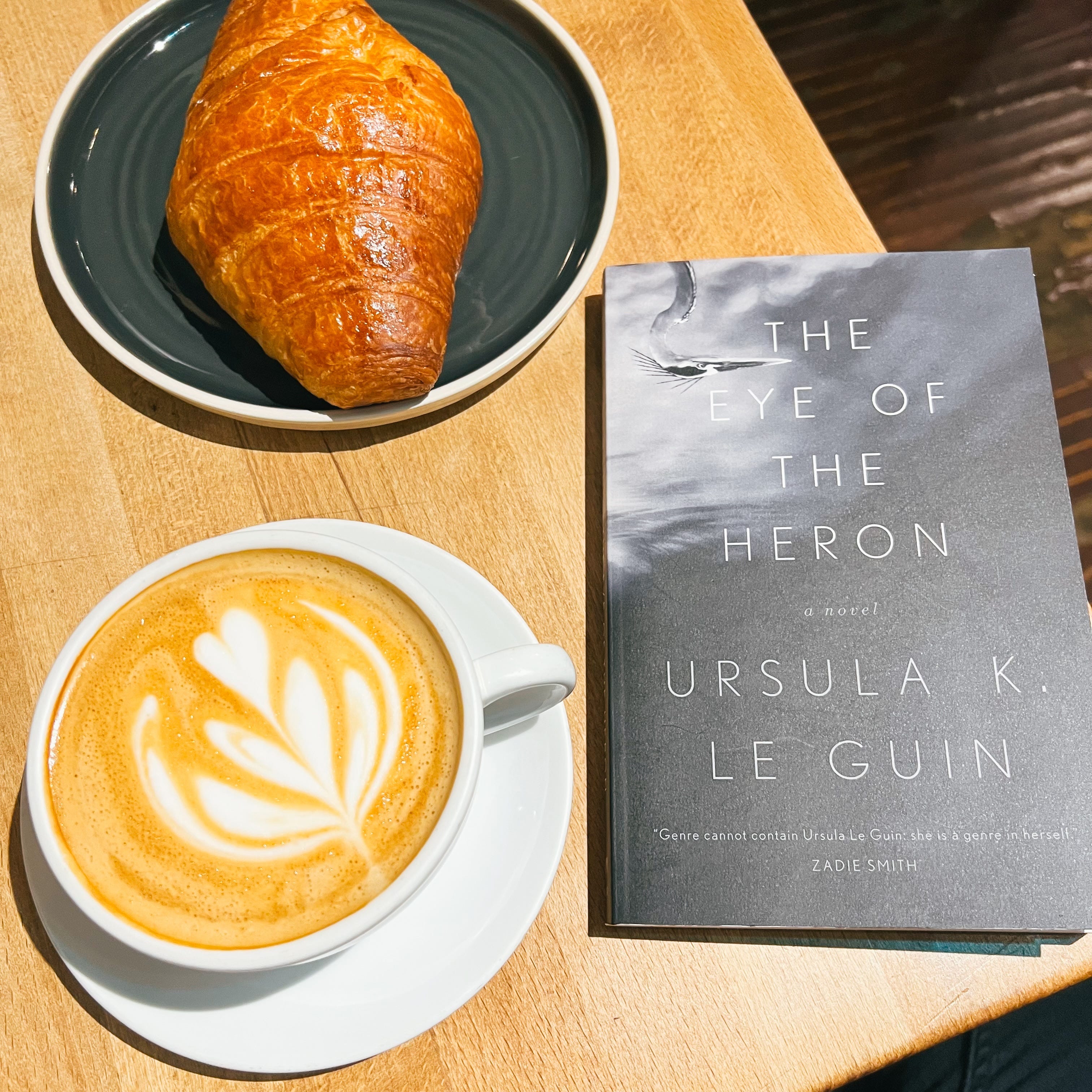
In the middle of my bleakest moments these past few weeks, I read The Eye of the World by Ursula K. Le Guin. Published in 1978, it’s a very unsubtle take on oppression, resistance, and the importance of having a moral compass to guide one’s actions. It’s a story of people working together to fight against seemingly impossible odds—a tale of persistence and fortitude when all hope seems lost. When I found this book in a Little Free Library, I didn’t have a clue what it was about, but it was exactly what I needed to be reminded of. Stories like these are the reason Le Guin is such a beautiful jewel in the SFF canon. In her characters, I was able see not only the fears that mirrored my own, but the version of myself I hoped I could be. By the time I put the book down, I’d begun to feel the first glimmers of hope that things could someday be okay again if people like me continued to rally against those who seem hellbent on destroying the average person’s life in order to eek out a bit of extra shareholder value.
It’s okay to be where you are right now.
At different times in our lives, this regenerative process required varying degrees of intensity. Maybe what you need is a low-stakes story that serves as the subtlest reminder that you’re not alone in feeling the way you do, and that it’s possible to overcome the little obstacles that have been tripping you up on a day to day basis. Or maybe you’re angry and motivated, but unsure of what to do with that energy. How many sci-fi or fantasy books have you read that feature one person overcoming impossible odds to defeat universe-threatening evil? If a lowly little farm boy can destroy the cartoonishly evil villain, there’s hope for you to join the crusade against our own cartoonishly evil politicians and billionaire bullies.
Because in most of these stories, the lesson is that the Lonely Hero is never really that alone after all. There are always Good People there to give help along the way. And maybe your role is to be one of those Good People joining your voice to the chorus cheering on a compassionate and principled political candidate. Or maybe, just maybe, YOU will be the one to step forward and lead a ragtag group of rebels to initiate meaningful change in the world.
Good fiction can be an escape when escape is what you need, but it is so much more than that. It’s a reminder that you’re not alone, and that you are stronger than you may be giving yourself credit for. It’s a way to tune into the longings of your heart and see how much fight you still have in you. It is always there when you need it, and there is more than you can ever consume in a lifetime. Go back and re-read your favourite book, then consider the ways it has shaped who you are and what you believe. Get lost in a book, and come back recharged and ready to fight another day.
I’m off to a protest tomorrow to add my voice to the opposition of corporate greed, but in the meantime I’ll be taking solace in fiction, and charging myself up for the days to come. See you among the stacks, comrades. You’re not alone in this fight.
- Mark Feenstra
Okay, you can put a bandage on a stubbed toe, but what about the lingering anger and frustration over having injured yourself in such a ridiculous way? Long after the toe has stopped hurting, there’s still an annoying little voice in your head saying “how could you be so stupid and uncoordinated?” every time you look at the bruised toenail.
No? Just me? Well, okay then.